Review Article | | Peer-Reviewed

Advances in Propagation of Mulberry (Morus spp.): Role of Plant Growth Regulators, Rooting Substrates and Micropropagation Techniques

Received: 24 April 2026     Accepted: 16 July 2026     Published: 30 July 2026
Views:       Downloads:
Abstract

Mulberry (Morus spp.) is a fast growing woody perennial fruit crop that has its principal role in the sericulture sector as being its major food source of nutrition for the silkworm (Bombyx mori). Although a number of techniques for its propagation are available, its propagation through hardwood cuttings has go on most popular owing to its ease of operation, cheap cost of operation and result uniformity. However, successful rooting of mulberry cuttings has often being affected by a number of parameters like usage of PGRs, rooting substrate type and time of planting. The review focuses on evaluating the contribution of different PGRs more particularly indole-3-butyric acid (IBA), naphthalene acetic acid (NAA) and cytokinins in inducing root initiation and vegetative growth of mulberry cuttings. Among these PGRs, IBA was documented to be most efficient auxin of its own class because different studies indicated increased sprouting, number of root and survival rate of rooted cuttings on different genotypes of mulberry. The review has also enabled elucidation of role of rooting substrates to a larger extent; cocopeat, perlite, vermiculite, vermicompost and Farm Yard Manure mix showed superior rooting performance owing to their superior physical and chemical properties. In addition, improvement of micro-propagation techniques was also evaluated and documented to be efficient in terms of utilization of BAP and IBA for in vitro multiplication of shoot and root growth, while offering a substitute for rapid multiplication of elite genotypes. However, their limitation like genotype specific response to hormone, low rate of acclimatization and erratic field performance were reported. Based on these study, this review recommends optimizing of variety-specific hormone media combination, standardization of micro-propagation regime and integration of molecular tools for precision in propagation for improvement of propagation efficiency, with genetic fidelity of planting material and ensuring sustainable production of mulberry for a more resilient sericulture sector.

Published in American Journal of Plant Biology (Volume 11, Issue 3)
DOI 10.11648/j.ajpb.20261103.17
Page(s) 95-105
Creative Commons

This is an Open Access article, distributed under the terms of the Creative Commons Attribution 4.0 International License (http://creativecommons.org/licenses/by/4.0/), which permits unrestricted use, distribution and reproduction in any medium or format, provided the original work is properly cited.

Copyright

Copyright © The Author(s), 2026. Published by Science Publishing Group

Keywords

IBA, Media, Sericulture, Cuttings, Micro-propagation, Survival Rate, Propagation, Sustainable Cultivation

1. Introduction
Mulberry (Morus spp.) is an important perennial fruit tree species belongs to the Moraceae family, originating in Asia. Known for its rapid growth, this deciduous woody perennial can develop into a medium-sized tree or shrub with a robust deep-root system. Mulberry serves as an important economical and medicinal plant, commercially grown for the use of leaves as a food source of monophagous insect silkworm (Bombyx mori), a key role in the silk industry . Most species within the Morus genus are diploid, possessing 28 chromosomes, with the genus encompassing 68 species and over 100 cultivars . These species are widely spread across Asia, with 19 species in Japan and 24 in China. Global distribution is exhibited by notable cultivars, including Morus alba (white mulberry), Morus rubra (red mulberry) and Morus nigra (black mulberry). Fruiting occurs in July, and the fruits can be white, purple and red. These fruits are rich in essential nutrients beneficial for human health . Beyond its use as food for silk worms, mulberry wood is utilized in making agricultural tools, recreational items and furniture, while its bark is used in high-quality paper production . China is the world's largest producer of silk, generating about 50,000 metric tons annually, followed by India with approximately 36,582 metric tons . Mulberry plants can reproduce both sexually and asexually. Desired features of the parent plant can be preserved by asexual reproduction using stem cuttings. Propagation with semi-hardwood cuttings is the most used asexual approach due to its cost-effectiveness, rapidity and efficiency. This technique ease of use and high success rate make it frequently select over alternative methods of transmission.
Synthetic plant growth regulator (auxins), such as Indole-3-butyric acid (IBA) has gained prominence for their ability to stimulate root initiation and development in plant cuttings. It enhances rooting success by promoting cell division and elongation in root primordial, making it a key component in the propagation of mulberry cuttings. This method not only ensures higher rooting efficiency but also contributes to the overall growth and success of the propagated plants when combined with suitable auxin treatment such as IBA and NAA . Cytokinins, especially 6-benzylaminopurine (BAP), play an important role in plant propagation through rapid cell division, multiple shoot initiation and suppression of apical dominance that triggers lateral bud growth, for the purpose of efficient clonal multiplication. They accomplish the induction of shoot organogenesis in callus tissues, increase adventitious bud formation, delay chlorophyll degradation and improve establishment and vigor in in vitro cultures. Morphogenesis is controlled by the cytokinin-auxin ratio; high levels of cytokinin promote shoot regeneration and establish BAP as one of the major components in micropropagation for many horticultural crops .
Selection an appropriate growing media is essential for effective proliferation. Sand, while chemically inert and neutral in pH, lacks nutrients, higher compactness and low water absorption capacity. Cocopeat, an organic material, is appreciated for its high water absorption capacity and ion exchange properties, which help maintain pH and electrical conductivity as well as provide good porosity and proper aeration for roots. Perlite is widely recognized for its ability to enhance soil aeration and support plant growth due to its excellent water absorption properties . As well as similarly, vermiculite is valued for improving soil aeration, retaining moisture and providing essential nutrients such as nitrates, potassium, phosphorus, calcium and magnesium. For best outcomes, one year old hardwood cuttings approximately 20-25 cm in length should be planted in February or March (spring season) to achieve quicker, maximum survival rate, and more efficient rooting.
Micro-propagation/tissue culture has revolutionized horticulture crop propagation by enabling rapid multiplication in a controlled environment. This technique involves growing plant cells/tissues in a nutrient medium under sterile conditions. Its advantages include rapid multiplication of elite varieties year-round, disease elimination and maintaining genetic stability. Micro-propagation conserves space, making it suitable for commercial production in limited areas and preserving rare varieties. Through growth condition adjustment enhances propagation efficiency. Overall micro-propagation ensures speed, disease control, genetic stability and space efficiency in fruit crop propagation, its global demands for high-quality produce .
1) The brief review of diver’s experimental findings various aspects reviewed under following headings/ subheadings.
2) Influence of plant growth regulators on shoot biomass response and root development in mulberry.
3) Influence of suitable growth media on shoot biomass response and root development in mulberry.
4) Influence of timing and method on shoot biomass response and root development in mulberry.
5) Micro-propagation on shoot biomass response and root development in mulberry.
2. Influence of Plant Growth Regulators
2.1. Shoot Emergence and Vegetative Growth
2.1.1. Number of Days Taken for Sprouting
Indole butyric acid @ 2000 ppm induced early sprouting in mulberry cuttings . While conducting an experiment to study the effect of Indole butyric acid on rooting of hardwood cuttings of pomegranate, observed that cuttings treated with IBA significantly exhibited early sprouting . Studied the effect of IBA treatments on the rooting of peach hardwood cuttings with IBA @ 3000 ppm was impactive in number of days taken for sprouting . The effect of IBA on propagation of fig (Ficus carica) by hardwood cutting treated with IBA @ 2500 ppm was impactive in number of days taken for sprouting .
2.1.2. Number of Sprouts Per Cutting
The cuttings of mulberry cultivar Thar Harit treated with IBA @ 2000 ppm had the maximum number of sprouts per cuttings . While evaluating the effect of indole butyric acid on V-1 mulberry cultivar cuttings, noticed that maximum numbers of sprouts were recorded with IBA @ 3000 ppm . Studied the effect of IBA on Morus alba hardwood stem cuttings treated with IBA @ 150 ppm and recorded the maximum number of sprouts per cutting . The cuttings of fig cultivar Brown Turkey treated with IBA @ 1000 ppm had the maximum number of sprouts per cuttings . Carried out an experiment to study the effect of IBA concentration on rooting of pomegranate cuttings and revealed that the highest numbers of sprouts per cutting were observed in cuttings treated with IBA @ 500 ppm . The number of sprouts were recorded maximum in stem cuttings of star gooseberry (Phyllanthus acidus) with IBA @ 2000 ppm treatment .
2.1.3. Sprouted Cuttings Percentage (%)
The cuttings of mulberry treated with IBA @ 2000 ppm had the maximum percentage of sprouted cuttings . While evaluating the influence of IBA on rooting and growth of Morus alba stem cuttings, found that cuttings treated with IBA @ 100 ppm had positive effect with regard to sprouting percentage . Conducted an experiment to study the effect of IBA concentrations on the rooting of peach hardwood cuttings . The maximum number of sprouted cuttings were noticed in IBA @ 3000 ppm. Reported the efficacy of indole butyric acid on rooting of stem cuttings of star gooseberry (Phyllanthus acidus) and revealed that maximum sprouting percentage was noted in cuttings treated with IBA @ 2000 ppm individually as well as in their combinations . The hard wood cuttings of wild fig treated with IBA @ 2500 ppm had the maximum percentage of sprouted cuttings .
2.1.4. Survival Percentage of Sprouted Cutting (%)
The cuttings of mulberry treated with IBA @ 2000 ppm had the highest survival per cent . While evaluating the response of IBA on stem cuttings of mulberry cultivar V-1, noted that highest survival percentage was found in stem cutting treated with IBA @ 3000 ppm . Carried out an experiment to study the effect of IBA on rooting of pomegranate hardwood cuttings treated with IBA @ 3000 ppm had the highest survival percentage . While studying the effect of IBA on Morus alba hardwood stem cuttings, revealed that the maximum survival percentage was observed in the hardwood stem cuttings treated with IBA @ 750 ppm . Studied the effect of various concentrations of IBA on the rooting of hardwood cuttings of Morus alba and reported that the cuttings treated with IBA @ 2000 ppm performed the best in survival percentage . The cuttings of ‘Himalayan’ mulberry treated with IBA @ 3000 ppm had the highest survival rate . While evaluating the response of IBA on hardwood cuttings of phalsa, noted that highest survival percentage was found in stem cutting treated with IBA @ 2000 ppm . Carried out an experiment to study the effect of IBA on rooting of fig (Ficus carica) hardwood cuttings treated with IBA @ 2000 ppm and observed the highest survival percentage . The cuttings of wild fig treated with IBA @ 2500 ppm had the highest survival rate .
2.1.5. Stem Height (cm)
The plant height was recorded maximum in the cuttings of mulberry cultivar V-1 treated with IBA @ 3000 ppm . While studying the effect of different treatments of IBA on the morphological performance of hardwood stem cuttings of mulberry, found that the cuttings treated with IBA @ 2000 ppm had the highest plant height . Carried out an experiment to study the effect of IBA on rooting of Morus alba hardwood cuttings treated with IBA @ 2000 ppm and recorded the highest stem height .
2.1.6. Stem Diameter (mm)
The stem diameter of mulberry was recorded highest in the hardwood stem cuttings treated with IBA @ 3000 ppm treatment . While studying the effect of indole butyric acid concentrations on the rooting of mulberry cuttings, revealed that cuttings of mulberry treated with IBA @ 2000 ppm showed good results on stem diameter . Reported the influence IBA on rooting and growth of pomegranate cultivar Ganesh and found that cuttings treated with IBA @ 2000 ppm had the maximum shoot diameter .
2.1.7. Number of Leaves Per Plant
The numbers of leaves were found maximum in hardwood stem cuttings treated with IBA @ 2500 ppm of wild fig . While studying the effect of indole butyric acid concentrations on the rooting of fig cultivar Brown Turkey cuttings, revealed that cuttings of fig cultivar Brown Turkey treated with IBA @ 1000 ppm showed good results on number of leaves per cuttings . Conducted an experiment to study the effect of IBA concentrations on the rooting of mulberry cultivar V-1 cuttings the maximum number of leaves were noticed in IBA @ 3000 ppm . Studied the influence of IBA on rooting and vegetative growth of mulberry cuttings, the maximum number of leaves were recorded with application of IBA @ 3000 ppm . The cuttings of Morus alba treated with IBA @ 2000 ppm had the highest number of leaves . While evaluating the response of IBA on ‘Himalayan’ mulberry stem cuttings, noted that highest number of leaves in stem cutting treated with IBA @ 3000 ppm . The cuttings of mulberry treated with IBA @ 2000 ppm had the highest number of leaves .
2.1.8. Fresh and Dry Weight of Shoots (g)
The fresh and dry weight of shoots was noted highest in cutting of mulberry treated with IBA @ 2000 ppm . While evaluating the effect of IBA on hardwood cuttings of fig cultivar Brown Turkey, observed that IBA @ 1000 ppm showed the maximum fresh and dry weight of shoot . Conducted an experiment to study that the effect of IBA induced rooting of Morus alba hardwood cuttings and observed that the cuttings treated with IBA @ 2000 ppm had the maximum fresh and dry weight of shoots .
2.1.9. Number of Roots Generated Per Cutting
The hard wood cuttings of wild fig treated with IBA @ 2500 ppm had the highest number of roots per cutting . While evaluating the effect of IBA on rooting of black mulberry hardwood cuttings, found that hardwood cutting of mulberry treated with IBA @ 2000 ppm showed the maximum number of roots per cutting . While studying the effect of indole butyric acid concentrations on the rooting of black mulberry cuttings, noted that cuttings of black mulberry treated with IBA @ 6000 ppm had the highest number of roots per plant . The effect of indole butyric acid on hardwood stem cuttings of Morus alba . They found that maximum number of roots per cutting were recorded in cuttings treated with IBA @ 2000 ppm. While evaluating the effect of IBA on rooting of hardwood cuttings of black mulberry, noted that the cuttings treated with IBA @ 5000 ppm had the best result with respect to root number .
The cuttings of Morus alba treated with IBA @ 3000 ppm had the maximum number of roots . While studying the effect of IBA on root and shoot development of ‘Himalayan’ mulberry stem cuttings, observed that highest number of roots were found in stem cuttings treated with IBA @ 3000 ppm . The response of IBA on stem cuttings of mulberry the maximum number of roots per cutting were found in stem cutting treated with IBA @ 3000 ppm .
2.2. Root Development
2.2.1. Fresh and Dry Weight of Roots Per Cutting (g)
The hardwood cuttings of wild fig treated with IBA @ 2500 ppm showed the maximum fresh and dry weight of roots . While conducting an experiment to study the effect of IBA concentration on rooting of hardwood cuttings of mulberry (Morus alba L.), found that cuttings treated with IBA @ 2000 ppm had the maximum fresh and dry weight of roots . While studying the effect of various concentration of IBA on rooting of cuttings of fig cultivar Brown Turkey, found that the cuttings treated with IBA @ 1000 ppm showed the highest fresh and dry weight of roots .
The hardwood cuttings of peach treated with IBA @ 3000 ppm showed the maximum fresh and dry weight of roots . While conducting an experiment to study the effect of IBA concentration on rooting of mulberry cuttings, found that cuttings treated with IBA @ 2000 ppm had the maximum fresh and dry weight of roots . While studying the effect of various concentration of IBA on rooting of fig cuttings, found that the cuttings treated with IBA @ 2000 ppm showed the highest fresh and dry weight of roots .
2.2.2. Root to Shoot Ratio
The cuttings of phalsa treated with IBA @ 300 ppm showed the maximum root to shoot ratio . An experiment was conducted to study the effect of indole butyric acid on rooting of stem cuttings of star gooseberry. In this study IBA @ 2000 ppm individually as well as in their combination had the maximum root to shoot ratio . While studying the effect of IBA treatments on hardwood cuttings in mulberry cultivar Thar Harit, found that cuttings treated with IBA @ 2000 ppm had the highest root to shoot ratio .
2.2.3. Root Diameter (mm)
The root diameter was recorded highest in hardwood cutting of black mulberry treated with IBA @ 6000 ppm . While studying the effect of IBA on the rooting of black mulberry (Morus nigra L.) hard wood cuttings, found that maximum root diameter was recorded in IBA @ 6000 ppm . The effect of various concentrations of IBA on the rooting of fig cutting and reported that the cuttings treated with IBA @ 2000 ppm had the maximum root diameter . The effect of IBA on rooting of hardwood cuttings of phalsa and found that cuttings treated with IBA @ 2000 ppm had the maximum root diameter . The effect of IBA on rooting of lemon cuttings and found that cuttings treated with IBA @ 2000 ppm had the maximum root diameter . The effect of various concentrations of IBA on the rooting of pomegranate stem cuttings and reported that the cuttings treated with IBA @ 2000 ppm had the maximum root diameter . Studied the effect of various concentrations of IBA on mulberry cuttings the highest root diameter was reported with IBA @ 2000 ppm .
2.2.4. Length of the Longest Root (cm)
The root length was recorded highest in hardwood cutting of wild fig treated with IBA @ 2500 ppm . While conducting an experiment for the effect of IBA on the rooting of black mulberry hardwood cuttings, observed that the cuttings treated with IBA @ 6000 ppm had the maximum root length . Studied the response of IBA on hard wood cuttings of black mulberry (Morus nigra L.) and observed that maximum length of the longest root with IBA @ 6000 ppm . Conducted an experiment to study various concentrations of IBA on hardwood stem cuttings of Morus alba and observed that maximum length of root was obtained when cuttings treated with IBA @ 2000 ppm . The effect of various concentrations of IBA on the rooting of hardwood cuttings of black mulberry (Morus nigra L.) and reported that the cuttings treated with IBA @ 5000 ppm had the highest root length .
The root length of Morus alba was recorded highest when hardwood cuttings treated with IBA @ 2000 ppm . While studying the effect of various IBA concentrations on root and shoot development of ‘Himalayan’ mulberry stem cuttings, found that root length was maximum in IBA @ 3000 ppm . An experiment to study the effect of IBA on the rooting in stem cutting of mulberry and observed that maximum length of root was recorded with IBA @ 3000 ppm .
2.2.5. Number of Roots
The numbers of primary and secondary roots were found maximum in hardwood cuttings of Morus alba treated with IBA @ 2000 ppm . While conducting an experiment to study the effect of IBA on the rooting in stem cutting of mulberry (Morus nigra L.) found that the maximum number of primary and secondary roots were recorded with IBA @ 2000 ppm . The various concentrations of IBA on rooting of hardwood cuttings of mulberry (Morus alba L.) and found that the maximum number of primary and secondary roots was recorded with IBA @ 5000 ppm . Conducted an experiment and observed the different concentrations of IBA on mulberry cuttings. The highest numbers of primary and secondary roots were reported with IBA @ 2000 ppm .
2.3. Physiological and Nutritional Response Nutrients Status of Leaves
The nitrogen, phosphorus, potassium and chlorophyll content were found maximum in hardwood cuttings of mulberry treated with IBA @ 2000 ppm compared to control .
3. Influence of Suitable Growth Media
3.1. Shoot Growth and Survival
3.1.1. Number of Sprouts Per Cutting
The number of sprouts per cutting were significantly increased in hardwood cuttings of mulberry planted in soil, sand and FYM in a ratio of 1:1:1 . While conducting an experiment to study the effect of potting media on growth and development of semi-hardwood cuttings of fig (Ficus carica) cv. Black Ischia found that the mixture of pond soil, river sand and vermicompost (2:1:1) was the most effective treatment which showed better results in number of sprouts per cutting . While conducting an experiment to study the effect of various potting media on growth and development of stem cuttings of mulberry (Morus nigra L.) found that sand, FYM, vermicompost and cocopeat was the most effective treatment which showed better results in number of sprouts per cutting . The number of sprouts per cutting were significantly increased in hardwood cuttings of mulberry planted in growing media combination of cocopeat, perlite and vermicompost in a ratio of 2:1:1 .
3.1.2. Sprouted Cuttings Percentage (%)
The mulberry cuttings planted in rooting media soil, FYM and coir pith (1:1:1) had the maximum sprouted percentage . While investigating the effect of rooting media on survival of hardwood stem cuttings of lemon cultivar Pant Lemon-1 found that maximum sprouting percentage was recorded in soil + sand + cocopeat medium . The effect of suitable growing media on mulberry propagation through cutting and observed that among all the rooting media, the highest sprouting success was recorded in the combinations of cocopeat, perlite and vermicompost in a ratio of 2:1:1 .
3.1.3. Survival Percentage of Sprouted Cutting (%)
The highest percentage of survival was recorded in stem cuttings of S. compacta species treated with IBA @ 2000 ppm and planted in perlite and peat of a equal (1:1) ratio . Rooting response of cuttings of mulberry in rooting media observed that the cuttings planted in soil, FYM and coir pith (1:1:1) had the highest survival percentage . An experiment to study the effect of different rooting media on semi-hardwood cuttings of fig (Ficus carica) cv. Black Ischia and results revealed that pond soil, river sand and vermicompost (2:1:1) showed the maximum survival percentage of rooted cuttings . The rooting medium in a soil, red soil, vermicompost in ratio 2:1:1 on the rooting of dragon fruit showed better results in survival percentage . Rooting response of cuttings of mulberry in suitable growing media, Meena et al. (2026b) observed that the cuttings planted in the combinations of cocopeat, perlite and vermicompost in a ratio of 2:1:1 had the highest survival percentage.
3.1.4. Stem Height (cm)
The plant height of fig (Ficus carica) cv. Black Ischia was recorded maximum in growing media pond soil, river sand and vermicompost in a ratio of 2:1:1 . While conducting an experiment on rooting medium of perlite and peat mixture in equal volume 1:1 ratio on the rooting of stem cuttings of S. compacta species, Arslan, (2024) found that maximum plant height in perlite and peat mixture of equal volume ratio. Reported that the substrate mixture comprising cocopeat, perlite and vermicompost in a 3:1:1 ratio, when used in large sized earthen pots, resulted in a greatest shoot length (23.60 cm) and the highest root-shoot ratio (0.67) in strawberry plants . Studied the response in strawberry growth in different substrates and containers under greenhouse and found that maximum plant height was observed in cocopeat, perlite and vermicompost (3:1:1) . While conducting an experiment on rooting medium of cocopeat, perlite and vermicompost in a ratio of 2:1:1 on the rooting of mulberry cuttings, found that maximum plant height .
3.1.5. Stem Diameter (mm)
The rooting medium in 1:1 ratio of perlite and peat mixture on the rooting of stem cuttings of S. compacta species showed better results in stem diameter . While conducting an experiment rooting medium of equal volume soil to sand mixture on the rooting of stem cuttings of salix, . found that maximum stem diameter. The effect of different suitable growing media and found that the maximum stem diameter were observed with cutting planted in the combinations of cocopeat, perlite and vermicompost in a ratio of 2:1:1 .
3.1.6. Number of Leaves/Plants
The rooting medium in a soil, sand and vermicompost (1:1:1) on rooting of M. indica variety V1 showed better results in number of leaves/plant . While studying the effect of types of rooting medium on rooting of semi-hardwood cuttings of fig (Ficus carica) cv. Black Ischia observed that number of leaves per cutting were significantly increased when hardwood cutting planted in pond soil, river sand and vermicompost (2:1:1) medium . The effect of different rooting media and found that the maximum number of leaves was observed with cutting planted in sand, FYM and clay . The response in mulberry growth in different substrates under open condition and found that maximum number of leaves was observed in cocopeat, perlite and vermicompost (2:1:1) .
3.1.7. Fresh and Dry Weight of Shoot (g)
The fresh and dry weight of mulberry shoot, (Morus alba L.) was recorded maximum with potting media soil, sand and farmyard manure in a ratio of 1:1:1 . While conducting an experiment to study the effect of IBA and different rooting media on lemon cultivar Pant Lemon-1 cuttings, Shira and Kumar (2015) found that soil and sand (1:1) medium had the maximum shoot fresh and dry weight per rooted cutting. Studied the effect of different rooting media and found that the maximum fresh and dry weight of shoots were observed with cutting planted in cocopeat, perlite and vermicompost (2:1:1) .
3.2. Root Growth and Development
3.2.1 Number of Roots Generated per Cuttings
The highest root number were observed in hardwood cuttings of mulberry planted in peat moss and sand (1:3) medium . While evaluating the effect of different IBA concentrations and various media on rooting of fig (Ficus carica) cv. Black Ischia cuttings, observed that the number of roots were maximum in mixture of pond soil, river sand and vermicompost (2:1:1) . The data of rooting response of M. indica variety V1 cuttings in rooting media and found that the cuttings planted in soil: FYM: Coir pith (1:1:1) had the highest number of roots . The rooting medium in a soil, red soil and vermicompost in ratio 2:1:1 on the rooting of dragon fruit showed better results in number of root per cutting . While evaluating the effect of various suitable media on rooting of mulberry cv. Thar Harit cuttings, observed that the number of roots were maximum in mixture of cocopeat, perlite and vermicompost (2:1:1) .
3.2.2. Fresh and Dry Weight of Roots Per Cuttings
The rooting potential of schefflera stem cuttings planted in sand-peat moss (1:1) medium proved to be significantly superior with regard to fresh and dry weight of roots (Helaly et al. 2024). While evaluating the effect of different medium on rooting of hardwood cuttings of mulberry (Morus alba L.), Singh et al. (2015) found that the maximum fresh and dry root weight were recorded in soil, sand and FYM (1:1:1). The rooting medium in a soil, red soil and vermicompost in ratio 2:1:1 on the rooting of dragon fruit showed better results in fresh and dry weight of root . While evaluating the effect of different medium on rooting of hardwood cuttings of mulberry (Morus alba L.), found that the maximum fresh and dry root weight were recorded in cocopeat, perlite and vermicompost (2:1:1) .
3.2.3. Root Diameter (mm)
The rooting potential of schefflera stem cuttings planted in cocopeat, perlite and vermicompost (2:1:1) medium proved to be significantly superior with regard to root diameter . While studying the effect of types of rooting medium, stem cutting and growth regulator on rooting potential of schefflera, Helaly et al. (2024) observed that root diameter was significantly increased in cutting planted in sand-peat moss (1:1) medium. The effect of soil addition on physical properties of perlite-based media on strawberry cultivar Camarosa, it was found that root diameter was maximum on soil addition than control (100% perlite) . The rooting medium in a soil, red soil and vermicompost in ratio 2:1:1 on the rooting of dragon fruit showed better results in root diameter .
3.2.4. Length of Longest Root (cm)
The root length was recorded maximum in the hardwood cuttings of mulberry with IBA @ 6000 ppm and planted in peat moss and sand ratio of 1:3 . While studying the rooting response of cuttings of fig (Ficus carica) cv. Black Ischia as effected by rooting media, observed that the planted in pond soil, river sand and vermicompost had the highest root length . The effect of different growing media on propagation of M. indica variety V1 cuttings and reported that root length was maximum in soil: sand: vermicompost (1:1:1) medium . Evaluated the root growth of Morus alba as affected by types of cutting and rooting media and results showed that maximum root length was recorded under hardwood cutting planted in sand, FYM and clay (1:1:1) medium . The rooting medium in a soil, red soil and vermicompost in ratio 2:1:1 on the rooting of dragon fruit showed better results in longest root length . While studying the rooting response of cuttings of mulberry cv. Thar Harit as effected by rooting media, Observed that the planted in media combinations of cocopeat, perlite and vermicompost (2:1:1) had the highest root length . Reported that the substrate mixture comprising cocopeat, perlite and vermicompost in a 3:1:1 ratio proved most effective for enhancing the strawberry root system . Plants grow in this medium exhibited the greatest maximum root length and the highest total root length, indicating superior root development compared with other tested substrate combination. Vertical PVC column (90 mm) filled with soilless substrate mixture of cocopeat + poerlite + vermicompost (3:1:1) produced maximum root surface area, number of secondary roots/ primary root, average length of primary and secondary roots and per cent increase in the length of most developed root in strawberry cv Sweet Charlie .
3.2.5. Root Volume (ml)
The rooting medium in a soil, red soil and vermicompost in ratio 2:1:1 on the rooting of dragon fruit showed better results in root volume . While studying the effect of growth regulator on rooting of semi-hardwood cuttings of pomegranate observed that root volume was significantly increased in hardwood cutting treated with higher concentration of IBA . Observed the effect of different growing media on propagation of mulberry cuttings and reported that root volume was maximum in media combinations of cocopeat, perlite and vermicompost in ratio of 2:1:1 . Reported that the substrate combination of cocopeat, perlite and vermicompost in a 3:1:1 ratio significantly enhanced root development, resulting in higher root density and root length density .
3.3. Physiological and Nutritional Response
3.3.1 Nutrients Status of Leaves
The effect of different growing media on propagation of mulberry cuttings and reported that nitrogen, phosphorus, potassium and chlorophyll content was maximum in media combinations of cocopeat, perlite and vermicompost in ratio of 2:1:1 .
3.3.2. Influence of Timing and Method
The review highlights examined the different planting dates (December 25, January 10 and January 25), three growth environmental conditions (open field, partial shade and mist chamber) was the affected in mulberry cutting propagation. According to reported that the hardwood stem cuttings, 15 cm long with 4–6 nodes, were taken from 5–6-year-old mulberry plants. Among the different treatments, the best results were observed when cuttings were planted on January 10 and grown in a mist chamber. Four local mulberry varieties Beyrudi, Hatuni, Sami and Yabani were also tested for survival rate and rooting success. Cuttings 20–25 cm long were taken during the dormant season from one-year-old shoots (on January 15 in the first year and February 20 in the second year). These cuttings were dipped in IBA solutions of varying concentrations for 10 seconds. Rooting performance was evaluated 93–118 days later by measuring length of longest root, rooting percentage and the number of roots per cutting. The best rooting was achieved with IBA 5000 ppm, with 'Beyrudi' showing the highest rooting rate. According to Polat reported that another experiment tested the effect of IBA and cinnamic acid (CA) on black mulberry cuttings in Tokat. Cuttings were collected in July, September, November and January and treated with 6000 ppm IBA, 6000 ppm IBA + 100 ppm CA, or 100 ppm CA alone. These were placed in perlite-filled, bottom-heated beds for 60 days. The highest rooting rate and average number of roots per cutting were recorded in cuttings taken in November and January treated with 6000 ppm IBA + 100 ppm CA .
4. Micro-Propagation
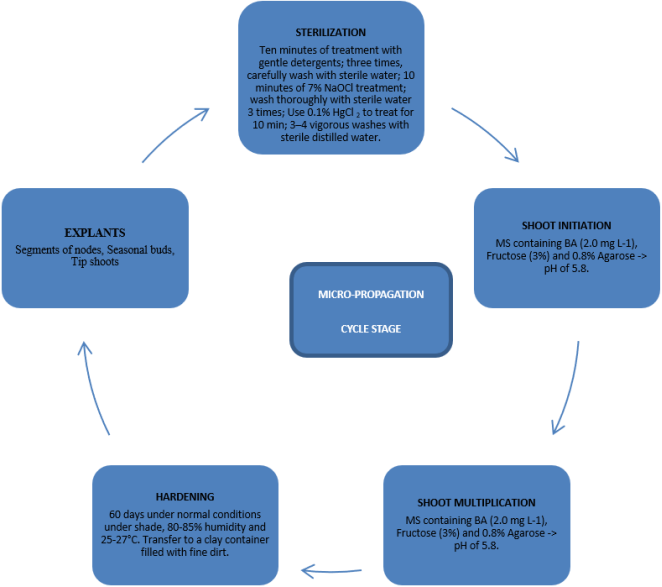
In vitro propagation of mulberry was carried out using axillary buds cultured on Murashige and Skoog (MS) medium. Shoot initiation was enhanced by supplementing the medium with different concentrations of 6-benzylaminopurine (BAP) along with 1 mg/L kinetin. The highest shoot initiation rate (90%) was observed with 2 mg/L BAP. When these initiated shoots were sub cultured on MS medium with 2 mg/L BAP and 1 mg/L kinetin, the average number of shoots increased. Maximum elongation (average of 19 elongated shoots) was recorded on MS medium containing 1 mg/L BAP and 1 mg/L kinetin. For root development, the best result (70% rooting rate) was obtained when elongated shoots were transferred to MS medium supplemented with 2 mg/L indole-3-butyric acid (IBA). These rooted plantlets, when hardened in peat moss pots in a greenhouse, showed an 80% survival rate . The hardened plantlets, acclimated using a 1:1 mix of vermicompost and soil, exhibited a survival rate of approximately 70% under natural field conditions . Apical buds of Morus indica L. were cultured on LSBM medium enriched with various concentrations of BAP and TIBA. The optimal medium for shoot initiation (94% response) and shoot multiplication (10.6 shoots per explant) was found to be LSBM supplemented with 8.88 µM BAP and 2 µM TIBA. These axenic plants, after gradual hardening, were successfully established in the field with a 90% survival rate . In another study using Morus alba L., nodal explants and shoot tips cultured on MS medium with BAP and kinetin showed high sprouting rates 80% for nodal explants and 70% for shoot tips. Rapid in vitro proliferation was observed when explants were grown on MS medium containing 2 mg/L BAP and 0.2 mg/L NAA. For enhanced shoot multiplication, a combination of BAP (2 mg/L), NAA (0.2 mg/L), asparagine (25 mg/L) and glutamate (1 mg/L) was most effective. Around 80% of shoots grown on MS medium with 1.0 mg/L NAA successfully developed roots . Field-grown mulberry explants were also cultured on MS medium with different phytohormone combinations.
Figure 1. In vitro application of tissue culture techniques for rapid propagation and genetic improvement of mulberry (Morus alba) genotypes .
MS medium supplemented with BAP (1.0 mg/L), TDZ (0.1 mg/L) and NAA (0.25 mg/L) produced multiple shoots from nodal segments. Adventitious shoots proliferated on secondary medium containing BAP (1.0 mg/L), NAA (0.25 mg/L) and gibberellic acid (GA3, 0.5 mg/L). Root induction was successfully achieved using MS medium with 0.5 mg/L IBA, with or without 1% (w/v) charcoal. The resulting plantlets, when hardened, achieved a 98% survival rate under greenhouse conditions. Overall, these micropropagation techniques (Figure 1) are highly effective and hold great potential for both transgenic applications and large-scale multiplication of mulberry plants.
5. Conclusion
The successful propagation of mulberry through cuttings can be significantly enhanced by the judicious use of plant growth regulators, appropriate rooting media and optimal timing. Indole-3-butyric acid (IBA) has proven to be particularly effective in improving survival rates, rooting percentages and root development; however, careful attention must be paid to its concentration, as excessive amounts may have inhibitory effects. Rooting media such as cocopeat, perlite, vermiculite and vermicompost offer considerable benefits by providing enhanced aeration, moisture retention and essential nutrients uptake, all of which contribute to vigorous and healthy root systems. By strategically combining the right plant growth regulators with suitable rooting substrates, practitioners can achieve higher propagation success rates, ensuring the multiplication and preservation of desirable mulberry varieties. This integrated approach not only promotes more efficient cultivation practices but also holds great promise in increasing both the yield and quality of mulberry crops. Ultimately, such advancements can lead to greater profitability in sericulture and related industries, thereby improving the livelihoods of farmers and supporting the sustainable growth of the mulberry sector.
Abbreviations

BAP

6-Benzylaminopurine

CA

Cinnamic Acid

FYM

Farmyard Manure

GA₃

Gibberellic Acid

IBA

Indole-3-Butyric Acid

LSBM

Low Salt Basal Medium

MS

Murashige and Skoog Medium

NAA

Naphthalene Acetic Acid

PGRs

Plant Growth Regulators

TDZ

Thidiazuron

TIBA

2,3,5-Triiodobenzoic Acid

Acknowledgments
The authors express sincere gratitude to Chaudhary Charan Singh Haryana Agricultural University, Hisar, Haryana, India, for providing the necessary access to conduct this research. Special thanks are extended to Dr. Anuradha Bishnoi, Assistant Scientist of Horticulture, for her invaluable inspiration and exceptional guidance throughout the study.
Author Contributions
Krishan Kant Meena: Data curation, Writing – original draft, Writing – review & editing
Anuradha Bishnoi: Conceptualization, Methodology, Resources, Supervision, Writing – review & editing
Piyush Verma: Validation, Writing – review & editing
Sukhdev Singh: Funding acquisition, Visualization, Writing – review & editing
Vikas Kumar Sharma: Formal Analysis, Methodology, Supervision, Validation, Writing – review & editing
Sanjay Kumar Acharya: Resources, Validation, Writing – review & editing
Km Rooma: Funding acquisition, Visualization, Writing – review & editing
Kuldeep Meena: Visualization, Writing – review & editing
Conflicts of Interest
The author declares no conflict of interest.
References
[1] Akin-Idowu PE, Ibitoye DO, Ademoyegun OT. 2009. Tissue culture as a plant production technique for horticultural crops. African Journal of Biotechnology, 8(20), 3793–3800.
[2] Anis M, Faisal M, Singh SK. 2003. Micropropagation of mulberry (Morus alba L.) through in vitro culture of shoot tip and nodal explants. Plant Tissue Culture, 13(1), 47-51.
[3] Arslan M. 2024. Effect of two different base cuts and indole-3-butyric acid (IBA) doses on rooting of stem cuttings of wild Silene compacta Fischer. Harran Tarım ve Gıda Bilimleri Dergisi, 28(1): 11-18.
[4] Attia A, Sdessoky E, El-Hallous EI, Shaaban HAF. 2014. Micropropagation of mulberry (Morus alba L.) cv. Al-Taify. International Journal of Biotechnology Research, 4, 15-22.
[5] Husen AH, Muhammad Iqbal MI, Siddiqui SN, Sohrab SS, Getinet Masresha GM. 2017. Effect of indole-3-butyric acid on clonal propagation of mulberry (Morus alba L.) stem cuttings rooting and associated biochemical changes. International Journal of Biological Sciences, 87(1): 161-166.
[6] Bhuva SK. 2013. Effect of plant growth regulators on propagation of fig by hardwood and semi-hardwood cuttings. M.Sc. Thesis, Navsari Agricultural University, Gujarat, India.
[7] Chander S, Kumar K. 2023. Optimization of IBA dose for rooting in fig (Ficus carica L.) cuttings. International Journal of Minor Fruits, Medicinal and Aromatic Plants, 9(1): 105-108.
[8] Chowdhary K, Singh G, Aulakh PS. 2022. Effect of different concentration of indole butyric acid on survival and rooting performance of pomegranate (Punica granatum L.). International Journal of Recent Advances in Multidisciplinary Research, 9(11): 8191-8194.
[9] Damar D. 2013. Effect of growth regulators and biofertilizers on survival of pomegranate stem cuttings. M.Sc. Thesis, Rajmata Vijayaraje Scindia Krishi Vishwa Vidyalaya, Gwalior, Madhya Pardesh, India.
[10] Elwakeel HMF, Awad AA, Nasser AEH. 2024. Rootability of some mulberry cultivars treated with growth regulators. Arab Universities Journal of Agricultural Sciences, 32(1), 89-98.
[11] Erdem SÖ, Akın OA, Çekic ÇÇ. 2021. Effects of thickness of hardwood black mulberry cuttings on rooting and sapling performance. Journal of the Agricultural Faculty of Gaziosmanpasa University, 38(2), 104-110.
[12] Godara AK, Sharma VK. 2016a. Influence of soilless media and containers on shoot growth of strawberry Fragaria × ananassa Duch. Cv. Sweet Charlie. International Journal of Farm Sciences. 6(1): 112-119.
[13] Godara AK, Sharma VK. 2016b. Influence of substrate composition on roots and their categories of strawberry plants grown in different containers. Research Journal of Agricultural Sciences, 7(2): 330-335.
[14] Godara AK, Sharma VK, Beniwal V. 2016. Effects of substrates and containers on root system of hydroponically grown strawberry (Fragaria × ananassa Duch.) under greengouse. Bangladesh Journal of Botany. 45(5): 1083-1089.
[15] Hawramee OA, Aziz RR, Hassan DA. 2019. Propagation of white mulberry (Morus alba L.) fruitless cultivar using different cutting times and IBA. In: IOP Conference Series: Earth and Environmental Science, 388, 1-10.
[16] Helaly AAE, Hegazy AA, Elboraie EA. 2024. Influence of medium type and IBA concentration on rooting ability and anatomical study of Schefflera (Schefflera arboricola) stem cuttings. Journal of Plant Production, 15(5): 243-247.
[17] Husen A, Iqbal M, Siddiqui SN, Sohrab SS, Masresha G. 2017. Effect of indole-3-butyric acid on clonal propagation of mulberry (Morus alba L.) stem cuttings: rooting and associated biochemical changes. Proceedings of the National Academy of Sciences, India Section B: Biological Sciences, 87(1), 161-166.
[18] Ingole AD, Raut UA, Mahalle SP, Kumar A. 2024. Effect of different soil media on rooting of dragon fruit cuttings. Environment and Ecology, 42(1A): 271-276.
[19] Jat DK, Singh KK, Mehta SK, Rana DK. 2017. Effect of growing conditions and time of planting on the rooting in stem cutting of mulberry (Morus alba L.) under sub-tropical valley condition of alley condition of Himalaya region. Bioscan: International Quarterly Journal of Life Sciences, 12(1), 511-514.
[20] Karabulut NS, Saraçoğlu O. 2022. The effects of cinnamic acid and IBA treatments on the rooting of wood cuttings of black mulberry (Morus nigra L.). Turkish Journal of Food and Agricultural Sciences, 4(1), 1-5.
[21] Kaur S. 2015. Effect of different treatments of Indole- 3- butyric acid (IBA) on the rooting and growth performance of hardwood cuttings of peach (Prunus persica L.) Agricultural Sciences Digest, 35(1): 41- 45.
[22] Kavyashree R. 2007. A repeatable protocol for in vitro micropropagation of mulberry variety S54. Indian Journal of Biotechnology, 6, 385-388.
[23] Kiruthika C, Susikaran S, Susikaran KT, Krishnamoorthy SV. 2020. Role of auxins on growth of apical shoot cuttings of mulberry (Morus indica L.) using mini clonal technology. International Journal of Chemical Studies, 8(4), 1896-1899.
[24] Kondle R, Singh G, Mirza AA, Kotiyal A. 2022. IBA effect on hardwood stem cuttings of Morus alba in open conditions in Punjab region. Ecology, Environment and Conservation, 28 (4), 1811-1813.
[25] Kumar C, Singh D, Kuri BR, Ahirwar MK. 2024. Growth and development of Fig (ficus carica) cv. Black Ischia cuttings under different growing media. Plant Archives, 24(1): 697-702.
[26] Kumari KR. 2014. Studies on the effect of IBA and rooting media on rhizogenesis of cuttings of pomegranate (Punica granatum L.) cv. Bhagwa under shade net conditions. M.Sc. Thesis, Dr. YSR Horticultural University, Venkataramannagudem, Andhra Pradesh, India.
[27] Li L, Deng X, Zhang T, Tian Y, Ma X, Wu P. 2022. Propagation methods decide root architecture of Chinese fir: Evidence from tissue culturing, rooted cutting and seed germination. Plants Achivers, 11(4): 2472.
[28] Meena KK, Auradha, Kumar M, Sharma VK, Meena K, Pradhan V, Rooma K. 2026a. Effect of Various Concentration of Indole-3-butyric Acid (IBA) and Soilless Rooting Substance Combinations on Nutrient Status of Leaves, Rooting, and Shoot Parameters of Mulberry (Morus alba L.) Cv. Thar Harit Cuttings, New Zealand Journal of Crop and Horticultural Science, 54(1): 1-13.
[29] Meena KK, Auradha, Kumar M, Sharma VK, Meena K, Pradhan V, Gavri A. 2026b. Effect of IBA treatments and suitable growing media combinations on survival and morphological performance of mulberry cuttings. New Zealand Journal of Crop and Horticultural Science, 54(1): 1-12
[30] Meena KK, Sharma KK, Sharma L, Sunil 2024. Micropropagation: A novel technique for propagation of horticulture crops. Just Agriculture e- newsletter, 04(10), 249-253.
[31] Mehta SK, Singh KK, Harsana AS. 2018. Effect of IBA concentration and time of planting on rooting in pomegranate (Punica granatum L.) cuttings. Journal of Medicinal Plants Studies, 6(1): 250-253.
[32] Mohammed NW, Kako SM. 2021. Effect of planting dates and different concentrations of IBA on rooting and vegetative growth of hardwood stem cutting of three species of mulberry (Morus spp). Journal of Duhok University, 24(1), 32-40.
[33] Nale R, Sharma G, Pal R, Patel RK, Sharma S. 2024. Effect of IBA and NAA on the Rooting and Vegetative Growth of Hardwood Cuttings in Common Fig (Ficus carica L.). International Journal of Bio-resource and Stress Management, 15(5): 01-06.
[34] Ocalan ON, Saracoglu O, Yıldız K, Cezik F, Al-Salihi AAM. 2023. Effect of IBA and caffeic acid on rooting of black mulberry (Morus nigra L.) hardwood cuttings in different dark conditions. Journal of Tekirdag Agricultural Faculty, 20(2): 270-277.
[35] Ors S, Anapali O. 2010. Effect of soil addition on physical properties of perlite based media and strawberry cultivar Camarosa plant growth. Scientific Research and Essays, 5(22): 3430-3433.
[36] Parmar HB. 2014. Efficacy of indole butyric acid on rooting of stem cuttings of star gooseberry. M.Sc. Thesis, Navsari Agricultural University, Gujarat, India.
[37] Polat AA. 2008. Effect of indolebutyric acid on rooting of mulberry cuttings. Acta Horticulture, 774.
[38] Pooja HS, Sadatulla F. 2022. Effect of indole-3-butyric acid on growth of V-1 mulberry cuttings with varying number of buds in Bangalore. International Journal of Plant & Soil Science, 34(24), 9-13.
[39] Rafeeq J, Mughal AH, Zaffar SN, Dutt V, Ahmad K, Raja T. 2020. Effect of IBA on rooting and growth of Morus alba shoot cuttings under temperate conditions of Kashmir. International Journal of Chemical Studies, 8(4), 3800-3802.
[40] Rahman MS, Islam SS. 2025. Rapid multiplication by nodal segment and shoot tips through in vitro micropropagation of six mulberry (Morus alba) genotypes. Plant Tissue Culture Biotechnology, 34(2), 105–114.
[41] Ratnamala M. 2013. Effect of auxins and type of cutting on propagation of phalsa (Grewia subinaequalis) under open and shadenet conditions. M.Sc. Thesis, Dr. YSR Horticultural University, Andhra Pradesh, India.
[42] Rebasiddanavar RM, Relekar SP, Allahham N, Purada S. 2024. Karnataka and India’s silk industry: A comprehensive analysis of sericulture dynamics. Journal of Experimental Agriculture International, 46(9), 274–293.
[43] Regmi S, Puri C, Shah K. 2022. IBA impact at different dose on mulberry cutting (Morus alba). Research in Agriculture, Livestock and Fisheries, 9(3), 253-257.
[44] Rohela GR, Shabnam AA, Shukla P, Aurade R, Gani M, Yelugu S, Sharma SP. 2018. In-vitro clonal propagation of PPR-1, a superior temperate mulberry variety. Indian Journal of Biotechnology, 17, 619-625.
[45] Sajeevan RS, Singh SB, Nataraja KN, Shivanna MB. 2011. An efficient in vitro protocol for multiple shoot induction in mulberry, Morus alba L variety V1. International Research Journal of Plant Science, 2(8), 254-261.
[46] Sharma VK, Godara AK. 2017. Response in strawberry (Fragaria × ananassa Duch. „Sweet Charlie‟) growth to different substrates and containers under greenhouse. International Journal of Current Microbiology and Applied Sciences, 6(11): 2556-2568.
[47] Sharma VK, Godara AK, Bhat S, Panda, AK, 2018. Root characteristics of strawberry (Fragaria × ananassa Duch.) in different soilless growing systems under protected cultivation. Chemical Science Review and Letters. 7(25): 237-243.
[48] Shira SD, Kumar H. 2015. Effect of growth regulators and potting media on morphological traits and rooting responses of salix cuttings under nursery condition. Trends in Biosciences, 8(23): 6495-6498.
[49] Singh B, Singh S, Singh G. 2011. Influence of planting time and IBA on rooting and growth of pomegranate (Punica granatum L.) Ganesh cuttings. Acta Horticulturae, 890(4): 183-188.
[50] Singh KK. 2018. Effect of auxins and rooting media on rooting in stem cutting of mulberry (Morus nigra L.). The Pharma Innovation, 7(11): 12-15.
[51] Singh KK, Tomar YK. 2015. Effect of planting time and indole butyric acid levels on rooting of woody cuttings of phalsa (Grewia asiatica L.). Hort Flora Research Spectrum, 4(1): 39-43.
[52] Singh KK, Jat DK, Mehta SK. 2015. Rootability of hardwood cuttings of mulberry (Morus alba L.) influenced by planting time and growing conditions under valley condition of Garhwal Himalayas. Plant Archives, 15(2): 1031-1036.
[53] Singh VP, Nimbolkar PK, Singh SK, Mishra NK, Awchare C, Tripathi A. 2016. Effect of different growing media, hormonal treatment and growing season on shoot and root characters of lemon (Citrus limon L.) cuttings. Research in Environment and Life Sciences, 9(4): 391-395.
[54] Sokhuma P, Intorrathed S, Phonpakdee R. 2018. Effect of IBA and NAA on rooting and axillary shoot outgrowth of 'Himalayan' mulberry stem cutting. International Journal of Agricultural Technology, 14(7): 1939-1948.
[55] Susikaran S, Shandeep SG, Haran MSR, Deeikshana T, Abinaya C. 2023. Rooting hormone and substrate effects on mini-cloned mulberry (Morus indica). International Journal of Plant and Soil Science, 35(20), 72-83.
[56] Swathi P. 2013. Studies on IBA and NAA induced rhizogenesis in propagation of pomegranate (Punica granatum L.) cultivars under open conditions. M.Sc. Thesis, Dr. YSR Horticultural University, Andhra Pradesh, India.
[57] Yuan Q, Zhao L. 2017. The mulberry (Morus alba L.) fruit: a review of characteristic components and health benefits. Journal of Agricultural and Food Chemistry, 65, 10383-10394.
Cite This Article
  • APA Style

    Meena, K. K., Bishnoi, A., Verma, P., Singh, S., Sharma, V. K., et al. (2026). Advances in Propagation of Mulberry (Morus spp.): Role of Plant Growth Regulators, Rooting Substrates and Micropropagation Techniques. American Journal of Plant Biology, 11(3), 95-105. https://doi.org/10.11648/j.ajpb.20261103.17

    Copy | Download

    ACS Style

    Meena, K. K.; Bishnoi, A.; Verma, P.; Singh, S.; Sharma, V. K., et al. Advances in Propagation of Mulberry (Morus spp.): Role of Plant Growth Regulators, Rooting Substrates and Micropropagation Techniques. Am. J. Plant Biol. 2026, 11(3), 95-105. doi: 10.11648/j.ajpb.20261103.17

    Copy | Download

    AMA Style

    Meena KK, Bishnoi A, Verma P, Singh S, Sharma VK, et al. Advances in Propagation of Mulberry (Morus spp.): Role of Plant Growth Regulators, Rooting Substrates and Micropropagation Techniques. Am J Plant Biol. 2026;11(3):95-105. doi: 10.11648/j.ajpb.20261103.17

    Copy | Download

  • @article{10.11648/j.ajpb.20261103.17,
      author = {Krishan Kant Meena and Anuradha Bishnoi and Piyush Verma and Sukhdev Singh and Vikas Kumar Sharma and Sanjay Kumar Acharya and Km Rooma and Kuldeep Meena},
      title = {Advances in Propagation of Mulberry (Morus spp.): 
    Role of Plant Growth Regulators, Rooting Substrates and Micropropagation Techniques},
      journal = {American Journal of Plant Biology},
      volume = {11},
      number = {3},
      pages = {95-105},
      doi = {10.11648/j.ajpb.20261103.17},
      url = {https://doi.org/10.11648/j.ajpb.20261103.17},
      eprint = {https://article.sciencepublishinggroup.com/pdf/10.11648.j.ajpb.20261103.17},
      abstract = {Mulberry (Morus spp.) is a fast growing woody perennial fruit crop that has its principal role in the sericulture sector as being its major food source of nutrition for the silkworm (Bombyx mori). Although a number of techniques for its propagation are available, its propagation through hardwood cuttings has go on most popular owing to its ease of operation, cheap cost of operation and result uniformity. However, successful rooting of mulberry cuttings has often being affected by a number of parameters like usage of PGRs, rooting substrate type and time of planting. The review focuses on evaluating the contribution of different PGRs more particularly indole-3-butyric acid (IBA), naphthalene acetic acid (NAA) and cytokinins in inducing root initiation and vegetative growth of mulberry cuttings. Among these PGRs, IBA was documented to be most efficient auxin of its own class because different studies indicated increased sprouting, number of root and survival rate of rooted cuttings on different genotypes of mulberry. The review has also enabled elucidation of role of rooting substrates to a larger extent; cocopeat, perlite, vermiculite, vermicompost and Farm Yard Manure mix showed superior rooting performance owing to their superior physical and chemical properties. In addition, improvement of micro-propagation techniques was also evaluated and documented to be efficient in terms of utilization of BAP and IBA for in vitro multiplication of shoot and root growth, while offering a substitute for rapid multiplication of elite genotypes. However, their limitation like genotype specific response to hormone, low rate of acclimatization and erratic field performance were reported. Based on these study, this review recommends optimizing of variety-specific hormone media combination, standardization of micro-propagation regime and integration of molecular tools for precision in propagation for improvement of propagation efficiency, with genetic fidelity of planting material and ensuring sustainable production of mulberry for a more resilient sericulture sector.},
     year = {2026}
    }
    

    Copy | Download

  • TY  - JOUR
    T1  - Advances in Propagation of Mulberry (Morus spp.): 
    Role of Plant Growth Regulators, Rooting Substrates and Micropropagation Techniques
    AU  - Krishan Kant Meena
    AU  - Anuradha Bishnoi
    AU  - Piyush Verma
    AU  - Sukhdev Singh
    AU  - Vikas Kumar Sharma
    AU  - Sanjay Kumar Acharya
    AU  - Km Rooma
    AU  - Kuldeep Meena
    Y1  - 2026/07/30
    PY  - 2026
    N1  - https://doi.org/10.11648/j.ajpb.20261103.17
    DO  - 10.11648/j.ajpb.20261103.17
    T2  - American Journal of Plant Biology
    JF  - American Journal of Plant Biology
    JO  - American Journal of Plant Biology
    SP  - 95
    EP  - 105
    PB  - Science Publishing Group
    SN  - 2578-8337
    UR  - https://doi.org/10.11648/j.ajpb.20261103.17
    AB  - Mulberry (Morus spp.) is a fast growing woody perennial fruit crop that has its principal role in the sericulture sector as being its major food source of nutrition for the silkworm (Bombyx mori). Although a number of techniques for its propagation are available, its propagation through hardwood cuttings has go on most popular owing to its ease of operation, cheap cost of operation and result uniformity. However, successful rooting of mulberry cuttings has often being affected by a number of parameters like usage of PGRs, rooting substrate type and time of planting. The review focuses on evaluating the contribution of different PGRs more particularly indole-3-butyric acid (IBA), naphthalene acetic acid (NAA) and cytokinins in inducing root initiation and vegetative growth of mulberry cuttings. Among these PGRs, IBA was documented to be most efficient auxin of its own class because different studies indicated increased sprouting, number of root and survival rate of rooted cuttings on different genotypes of mulberry. The review has also enabled elucidation of role of rooting substrates to a larger extent; cocopeat, perlite, vermiculite, vermicompost and Farm Yard Manure mix showed superior rooting performance owing to their superior physical and chemical properties. In addition, improvement of micro-propagation techniques was also evaluated and documented to be efficient in terms of utilization of BAP and IBA for in vitro multiplication of shoot and root growth, while offering a substitute for rapid multiplication of elite genotypes. However, their limitation like genotype specific response to hormone, low rate of acclimatization and erratic field performance were reported. Based on these study, this review recommends optimizing of variety-specific hormone media combination, standardization of micro-propagation regime and integration of molecular tools for precision in propagation for improvement of propagation efficiency, with genetic fidelity of planting material and ensuring sustainable production of mulberry for a more resilient sericulture sector.
    VL  - 11
    IS  - 3
    ER  - 

    Copy | Download

Author Information
  • College of Horticulture, Sardarkrushinagar Dantiwada Agricultural University, Jagudan, India

  • Regional Research Station, Chaudhary Charan Singh Haryana Agricultural University, Bawal, India

  • College of Horticulture, Sardarkrushinagar Dantiwada Agricultural University, Jagudan, India

  • College of Agriculture, Swami Keshwanand Rajasthan Agricultural University, Bikaner, India

  • College of Agriculture, Chaudhary Charan Singh Haryana Agricultural University, Hisar, India

  • College of Horticulture, Sardarkrushinagar Dantiwada Agricultural University, Jagudan, India

  • College of Agriculture, Chaudhary Charan Singh Haryana Agricultural University, Hisar, India

  • Institute of Agriculture Science, Visva-Bharati, Sriniketan, India